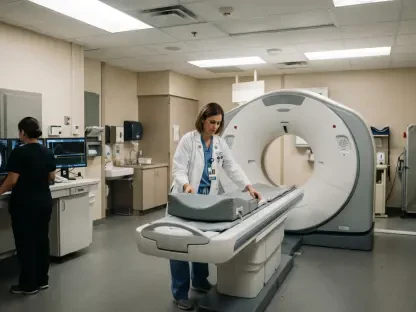

CMS’s Transforming Episode Accountability Model now holds hospitals responsible for cost and quality across surgical procedures for 30 days post-discharge, requiring real-time tracking rather than retrospective audits. This regulatory shift has fundamentally altered the financial landscape for

Traditional fixed-base robot arms often fail to reach every necessary measurement point on large automotive components, forcing engineers to manually reposition hardware mid-test. This persistent challenge has grown more acute as the automotive sector accelerates its transition to highly integrated

Advanced cross-modal reconstruction techniques have proven effective in predicting cardiovascular diseases by bridging the gap between passive pulse detection and active electrical readings. This technological breakthrough serves as the cornerstone of Samsung’s latest initiative to integrate

As the Pentagon streamlines its acquisition process, the burden of proof for AI security is shifting from pre-award certifications to post-award technical audits and legal liabilities. This seismic change marks the end of an era where extensive paperwork served as the primary gatekeeper for defense

The disparate ethical standards currently governing software developers and mental health practitioners create significant risks when automated systems are deployed to support oncology patients. As the healthcare industry navigates the complexities of digital transformation in 2026, the

Achieving cinematic precision now relies on frame-level control features like motion brushes and inpainting to perform surgical revisions on AI-generated assets. This paradigm shift has redefined the landscape of digital media, moving the industry away from the novelty of simple clip generation