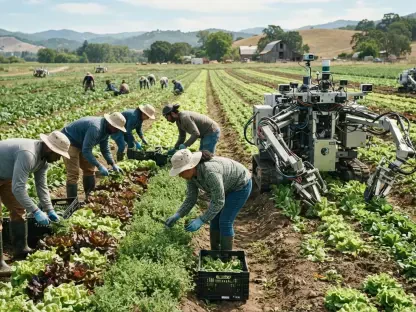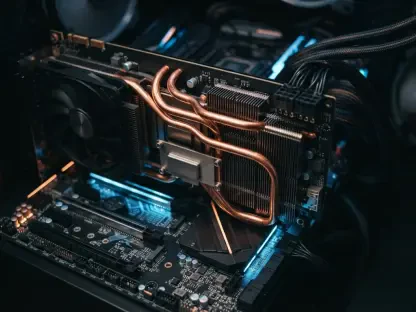

Senator Murray explicitly rejected the idea that AI risks are a hoax, instead characterizing the failure to regulate as a significant dereliction of duty for the federal government. In the current landscape of 2026, the proliferation of generative models and autonomous decision-making systems has
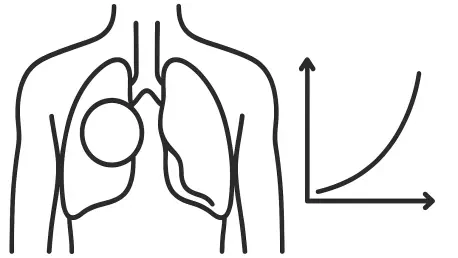
CT radiomics operates by treating medical images as mineable sources of biological data, extracting quantitative features that describe the spatial distribution of pixel intensities. For millions of patients worldwide in 2026, the discovery of a ground-glass nodule (GGN) on a routine chest CT scan

Maintaining an exhaustive AI inventory and a detailed Bill of Materials is essential for identifying and eliminating unauthorized shadow AI tools within financial networks. As the payment industry navigates the complexities of 2026, the PCI Security Standards Council (PCI SSC) has stepped forward

The digital landscape shifted fundamentally today as Mistral AI revealed a model capable of navigating the complex nuances of human logic while simultaneously managing the rigorous demands of industrial-scale cybersecurity. Mistral Large 4, nicknamed "le Chonk," represents a significant leap toward

Atlassian is challenging the industry trend of headless automation by insisting that artificial intelligence must share the same workspace and context as human employees to be truly effective. In the current landscape of 2026, the obsession with background scripts and API-driven workflows has often
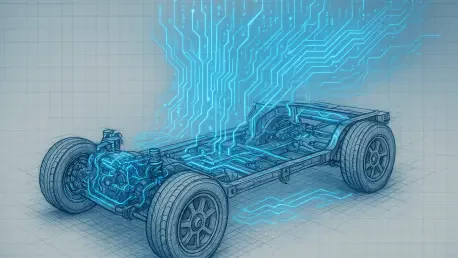
The pursuit of autonomous systems has long been stalled by the astronomical costs of human-labeled data and the inability of rigid algorithms to adapt to the unpredictable messiness of the physical world. For years, the industry operated under the assumption that more miles driven equaled more